
Volume 3

Dear Friends
South Africa stands at a decisive moment in advancing our climate-attuned development path. The DRAFT updated Nationally Determined Contribution (NDC) has been tabled before Cabinet for adoption, a decision that will define the ambition and credibility of our climate response for the next decade. It is a pivotal test of leadership that will show whether South Africa is ready to take ambitious action based on best available science or continue along a path of climate delay and compromise.
Today, we have released Policy Brief 03: Confronting ‘an Existential Problem of Planetary Proportions,’ a timely and essential analysis of whether South Africa’s new climate plan reflects a science-based and resilient development path. The brief examines how the Climate Change Act and the proposed NDC align with principles of equity, ambition, and global responsibility. It offers a roadmap for policymakers, civil society, and philanthropies to ensure that our commitments are not only credible but transformative, and encourages stronger implementation, transparent monitoring, and genuine public participation in climate law and policy making.
As the G20 Leaders’ Summit draws closer, South Africa’s presidency places the country at the centre of global economic decision-making. For most of the world’s people, however, the G20 remains a space where decisions are made about them, not with them. That is why we and our partners are convening We, the 99%: The People’s Summit for Global Economic Justice, an international people-driven civic forum where movements, communities, and civil society will gather to reclaim democracy, challenge inequality, and reimagine an economy rooted in justice and care.
Underpinning our efforts and investments is our single-minded conviction that economy is care.
Below you will find highlights from our work.
Sekoetlane Phamodi
Updates
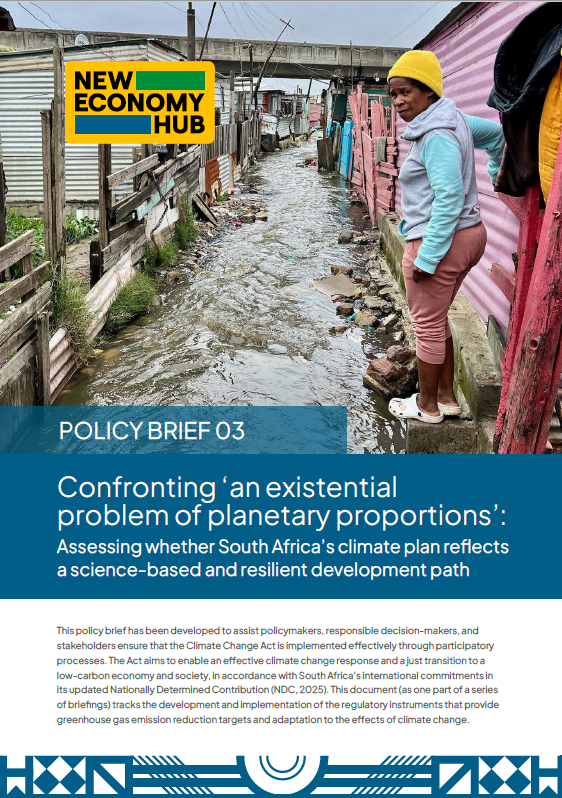
Policy Brief Launch: Confronting ‘an existential problem of planetary proportions’
This week, the Cabinet is set to review and potentially adopt South Africa’s 2nd Nationally Determined Contribution (NDC). Our third policy brief in a series examining the evolution of South Africa’s legal and policy landscape to bring ambitious climate action to the centre of economic and social development unpacks the Draft NDC statement, which was published for public consultation in July 2025. The brief assesses whether South Africa’s climate targets align with the best available science, meet its international obligations, and reflect its fair share of global responsibility, while considering the country’s capacity to make its most ambitious possible effort to reduce the emissions driving climate change.

Economy is Care Dialogue Series
Since August, we have been collaborating with Oxfam South Africa to deliver a five-part public dialogue series premised on the simple question: What if the economy was built to care for us, not control us? Over five Sunday afternoons, Economy is Care brings together economists, policymakers, activists, artists, and communities in intimate, culturally rich spaces to reimagine economic policy through justice, sustainability, and care. Each dialogue fuses conversation with art, music, and food, creating space for deep reflection and practical imagination. To date, we have brought together leading practitioners including Dr Lebohang Pheko, Thokozile Madonko and Duma Gqubule to build knowledge and inspire critical thinking about how we should understand “the economy” and whom it should serve. For those of you who are based in Johannesburg, don’t miss the final discussion this Sunday, 19 October, So, whose economy is it anyway? Save your seat. Our final host Matshidiso Lencoasa, a public finance analyst and Chairperson of the Budget Justice Coalition, brings her sharp analysis and grounded expertise in fiscal justice to the biggest question of them all. Joined by our previous hosts, she leads us in reflecting on what we’ve learned, what still feels contested, and what kind of future we dare to build next
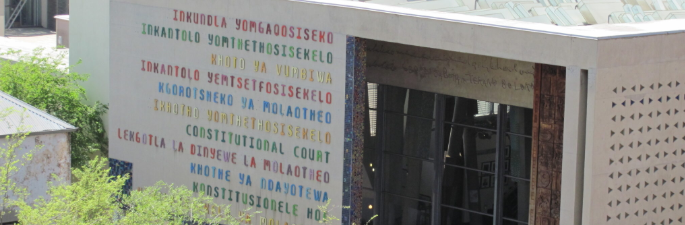
Beyond the G20: Funding People’s Power for Global Economic Justice
The South African Presidency has themed this year’s G20 to focus on solidarity, equity, and sustainability. Twenty years into its lifetime, the G20 system has demonstrated that realising global economic justice on these terms is unlikely to happen through endless negotiations at elite summits, especially in the light of the geopolitical turbulence and multiple security crises we are living through today. Writing ahead of the We, the 99% People’s Summit for Global Economic Justice (20–22 November, Constitution Hill) our director, Sekoetlane Phamodi, urges South African philanthropies and family offices to look beyond the G20 institution if they want their resources to make a material impact, and to invest in communities, movements, and civic power that is capable of reshaping the fiscal-social compact for a fairer world. Read their letter to them here.
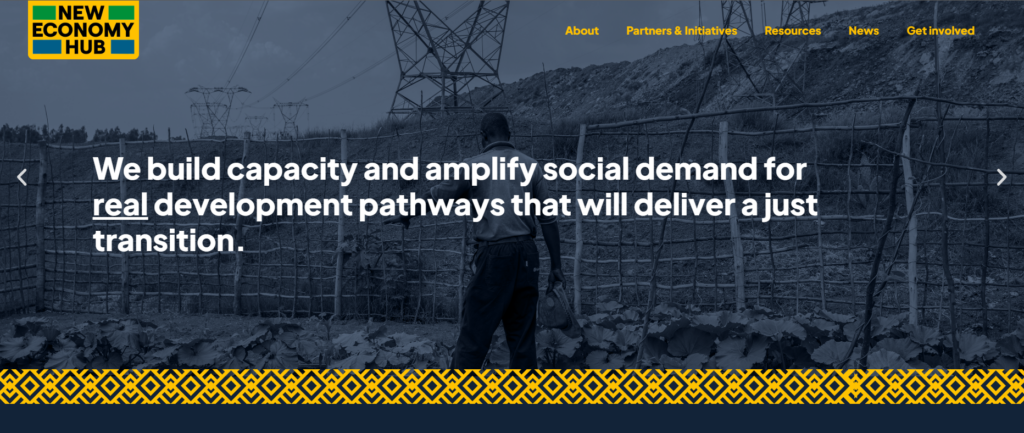
New Economy Hub Website Refresh
We’ve refreshed our website to make it easier to navigate, explore, and connect with our work. The refresh offers a clear view of our mandate, initiatives, and publications from climate justice to economic reform and introduces the partners helping us build a just and caring economy. Whether you’re looking for our latest policy brief, upcoming events, or collaboration opportunities, you’ll now find it all in this more accessible and easier-to-navigate space

NEH welcomes Kearabetswe Moopelo
We’re thrilled to have Kearabetswe join as our Programme Officer for Networks and Advocacy. Her work sits at the intersection of community organising and policy change. Grounded in justice-driven transformation, she has spent the past several years building alliances that connect grassroots movements to national and regional decision-making spaces shaping more inclusive and accountable pathways for economic and energy futures in Africa. From land governance and extractives to fiscal transparency and energy justice, she has coordinated multi-stakeholder processes that reimagine how power and resources are governed. Her approach weaves together community-rooted perspectives, anthropological depth, and policy fluency bridging the human realities of inequality with the structural levers of change.
Partners in Action
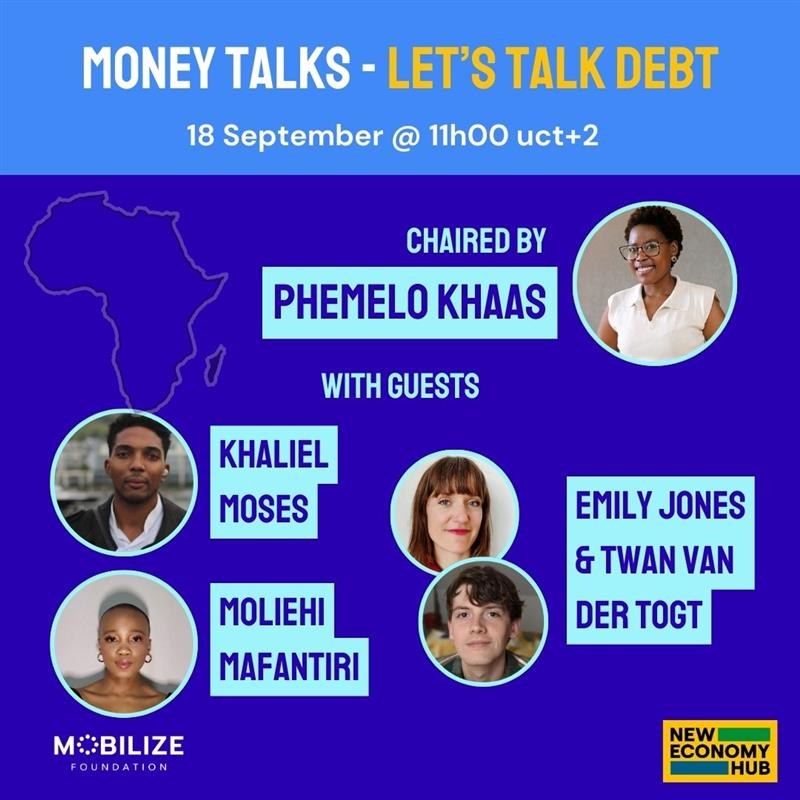
Money Talks: Debt – Polling South African attitudes towards sovereign debt and development
The Money Talks series, running since 2023, is a polling-based research initiative exploring how money, power, and policy shape everyday life and public perception. This year, it turned its focus to one of the most powerful yet least understood forces behind inequality and dependence: sovereign debt and its impact on investment in climate action and human development. In partnership with Mobilize, Blacksands Communications, and Stack Data Strategy, we hosted a webinar and podcast to unpack the findings, with an interactive dashboard available to explore the data in greater depth.
Elevating African CSO voices in the G20
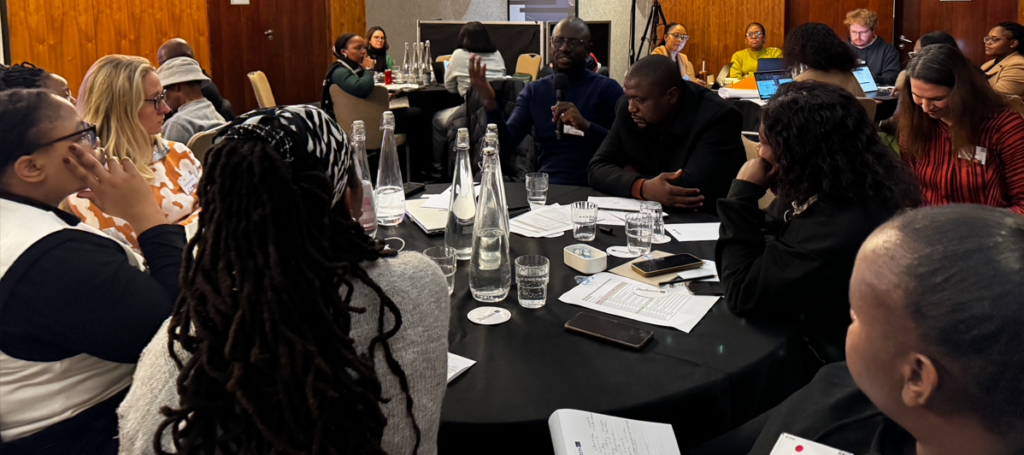
In late July, the Africa CSO G20 Climate, Energy and Sustainable Finance Group (ACG20) convened over 90 participants from across Africa and including the USA and UK, in a strategy and action meeting to advance African G20 advocacy priorities and ambitions.. Their priorities are to secure progressive outcomes on health, air quality, and climate; just energy transitions and minerals; adaptation and disaster reduction; food systems and climate; and sustainable finance by which all of these can be paid for. The network now represents over 100 organisations from across Africa, and intends to reconvene in November to reflect on the success of their efforts as well as how to strengthen their collective action in the G20 and other global governance processes in 2026 and beyond.

The Conversation Africa elevates Africa’s G20 voice with 40+ expert articles
Since 2024, The Conversation Africa (TCA) has been doing powerful work delivering science-based African perspectives on African climate and development priorities and innovation through a dedicated climate section. Following South Africa’s assumption of the G20 Presidency, TCA has levelled up this work to bring a sharp focus to how “the African G20” should be leveraged to advance Africa’s development priorities across the themes of financial architecture reform, energy, food and social security, as well as culture and heritage. To-date, they have published over 40 research-backed articles written by over 15 leading scholars in the realms of finance, law, human development, and global governance
Power Moves

We, the 99% People’s Summit for Global Economic Justice
From 20-22 November 2025, the “We, the 99% People’s Summit for Global Economic Justice will convene social movements, civil society, and allies from across the globe to reclaim democracy and reshape the economy. Positioned as a people-led counterspace to the official G20 program, the People’s Summit will happen on the margins of the G20 Leaders Summit. The primary objectives of the Summit are to build solidarity networks among local and international civic campaigning for economic justice, ambitious climate action, and the prioritisation of human development, as well as to map out how to build a locally embedded but globally connected shared advocacy agenda and the campaigns that will build and win back people’s power to shape a new economy

South African Presidency of the ECSWG Convenes G20 Science Policy Dialogue
In September, the Department of Forestry, Fisheries and the Environment convened the ECSWG Science-Policy Dialogue as part of its efforts in shepherding the Environment, Climate and Sustainability Working Group to a consensus informed by the best available science. The Dialogue was also one of the rare moments where academics, practitioners, and civil society were afforded direct access to the G20 process and participate in a constructive dialogue with negotiators. We and several of our civil society partners took up the opportunity to engage in the Dialogue, included in the group was the ACG20, a regional network representing over 100 CSOs across Africa.
Copyright (C) 2025 New Economy Hub. All rights reserved.
Our mailing address is:
hello@neweconomyhub.org
Want to change how you receive these emails?
You can update your preferences or unsubscribe